
Frequently Asked Questions
At Concrete Belfast, we know that planning a concrete project raises plenty of questions — whether you’re pouring a shed base, laying a driveway, or preparing for a foundation slab. Below you’ll find answers to the most common queries we get from customers across Belfast and the surrounding areas.
How do I know your contractors are reliable?
Our team is fully licensed, insured, and highly experienced, ensuring dependable and professional service.
What types of concrete services do you offer?
We provide everything from residential driveways to commercial foundations and decorative concrete finishes.
What areas do you cover?
We serve Belfast and all surrounding areas including Newtownabbey, Lisburn, Bangor, and Holywood. If you’re nearby and need concrete work, get in touch.
How long does a typical concrete project take?
Project duration varies, but most residential jobs complete within a few days, depending on scope and weather.
Do I need planning permission?
In most cases, no planning permission is needed for a standard driveway or slab. However, if your concrete surface affects drainage or exceeds certain size thresholds, you may need approval. We can advise you as part of the site assessment.
Can you provide a free estimate for my project?
Yes, we offer complimentary consultations and detailed quotes to help you plan effectively. Click here for a quote!
How much will if cost?
Prices can vary depending on the size, thickness, and prep work involved. On average, a standard concrete slab in Belfast starts from around £80–£120 per m², including labour and materials. We’re happy to provide a free quote based on your exact requirements.
Explore Our Concrete Services
Discover our comprehensive range of concrete solutions in Belfast, all crafted to ensure durability and customer satisfaction.
Residential Concrete Work
We specialize in custom concrete projects tailored to enhance your home’s exterior and interior spaces.
Commercial Concrete Services
Offering expert concrete installations designed to meet the demands of your business environment efficiently.
Concrete Repair and Maintenance
Reliable solutions to restore and preserve the integrity of your existing concrete structures with expert care.
Explore Our Concrete Services
Discover our comprehensive range of concrete solutions in Belfast, all crafted to ensure durability and customer satisfaction.
Residential Concrete Work
We specialize in custom concrete projects tailored to enhance your home’s exterior and interior spaces.
Commercial Concrete Services
Offering expert concrete installations designed to meet the demands of your business environment efficiently.
Concrete Repair and Maintenance
Reliable solutions to restore and preserve the integrity of your existing concrete structures with expert care.
FACTS ABOUT CONCRETE
1. Concrete takes 28 days to reach full strength
Concrete sets in a few hours, but it cures gradually, reaching about:
- 70% strength in ~7 days
- 100% strength at 28 days
This is industry standard worldwide.
2. You can usually walk on new concrete after 24–48 hours
Light foot traffic is okay after a day or two.
For a driveway or van, you normally need to wait:
- 7 days for cars
- 28 days for heavy vehicles
3. Northern Ireland’s cold, wet weather affects curing
Cold temperatures can slow down the curing process, and rain on fresh concrete can weaken the surface.
Contractors often:
- Monitor the forecast
- Add protective covers
- Use additives for cold-weather pours
4. A standard concrete mix is typically C20 or C25 for domestic jobs
Common mixes in NI/UK:
- C20 → patios, paths, garden slabs
- C25 / C30 → driveways, shed/workshop bases
- C35 and higher → commercial or heavy loads
5. Sub-base preparation is more important than the concrete itself
Most cracked driveways and patios happen because:
- The ground wasn’t compacted
- There was no hardcore layer
- The base moved or settled
A good contractor will install:
- 100–150mm compacted hardcore
- 100–150mm reinforced concrete (depending on use)
6. Concrete doesn’t need paint or coating but can be sealed
Sealing concrete:
- Reduces staining
- Protects against moss and algae (common in NI)
- Helps prevent cracking from freeze–thaw cycles
7. Reinforcement (mesh or fibres) reduces cracking
Steel mesh or polypropylene fibres help control:
- Shrinkage cracks
- Movement
- Temperature changes
Most domestic slabs should have reinforcement.
8. Concrete can last 30–50+ years with proper installation
A well-laid driveway or slab can easily outlast most paved surfaces.
Longevity depends on:
- Mix strength
- Base preparation
- Drainage
- Freeze–thaw protection
9. Expansion joints prevent major cracks
Concrete naturally expands and contracts.
Install saw-cut joints every 2–3 metres to avoid random cracking.
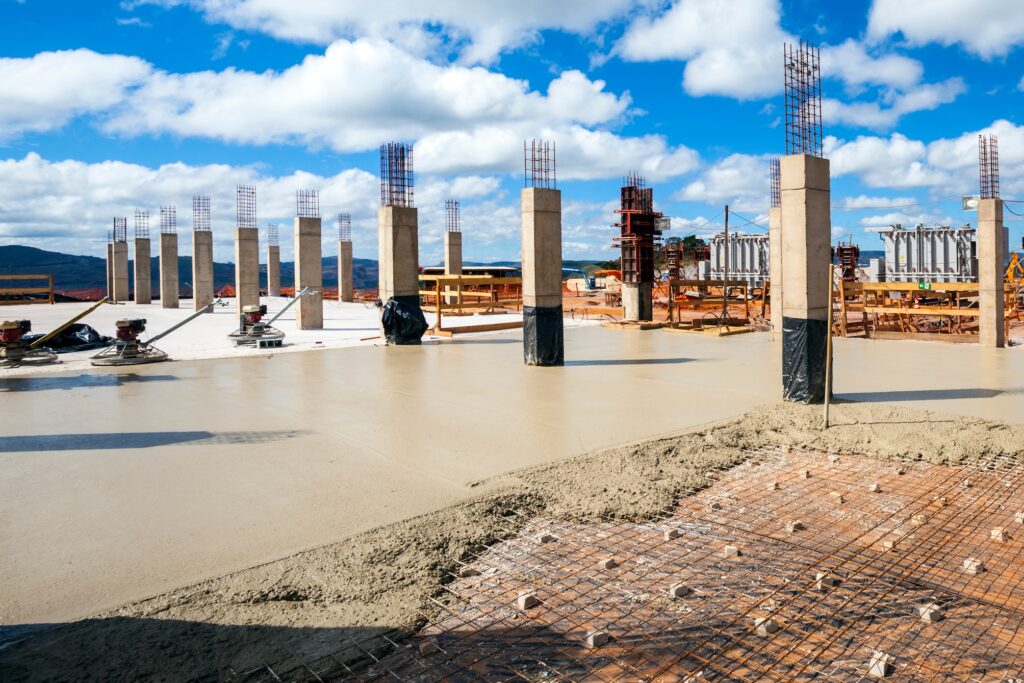
10. Power-floating gives a smooth, workshop-ready finish
If a customer wants:
- A workshop base
- A garage floor
- A gym floor
Then a power-float finish gives a tight, flat, durable surface.
11. Concrete is stronger in compression than tension
It’s excellent for heavy loads (cars, machinery) but weaker against bending or pulling forces — which is why reinforcement is important.
12. A sloped driveway should have at least 1:80 fall
To avoid standing water (especially in Belfast’s climate), concrete areas need proper drainage.
13. Concrete is fire-resistant and non-combustible
This is why it’s often used for fire separation and structural floors.